Topics:

Showing posts with label Tech. Show all posts

Friday, January 9, 2015

Spotify, Consumers and Businesses (#19a)

Spotify is poised to take over the majority of music sales someday.  Here’s why.

Know your target.  Spotify does; it chose casual listeners over what I would call “hardcore listeners”.  You know the type: they hang out at record stores, buy concert tickets, merchandise, and equipment for both listening and playing.  They might be the most valuable piece of the market, but to fight for them would bring the combined wrath of the big 3 record labels, Sony, Apple, Beats, and probably the Catholic Church for good measure.  Instead Spotify chose to be music for the rest of us.

This is an important piece of Spotify's winning strategy because the company is what you would call a disruptor.  Almost all disruptive business models involve 1. a new technology or capability to undercut the big players and 2. focusing on the least attractive customers.  By targeting those who rarely buy music, Spotify received minimal retaliation from the record labels, iTunes, and CD sellers while building up sales, users, scale and experience.  Remember that Spotify was completely free on desktop from day 1, a strategy Rhapsody and (legal) Napster never dared.  By the time the incumbents felt threatened, they were behind the streaming wave.

But wait, doesn’t Spotify have plenty of company in the casual music listener space?  Pandora is the original streaming radio and has an impressive library.  An array of playlist apps like Songza and user-submitted music apps like Soundcloud are still free.  Youtube Music Key is only a few months old, but promises to harness the world’s greatest content creation platform for an ads-free, online and offline music experience that, combined with the existing Google Music service, will be tough competition for Spotify.  

Still, the green streaming machine has staked out its position as cheap relative to owning music, but more premium than its peers.  While all streaming services may have a superior product to CDs, Spotify leapfrogged its peers with simplicity, focus, and overall user experience.  The features, such as the ability to see what music your Facebook friends like, add value without muddling the experience. I converted to the cult of Spotify a year ago, and it took a lot to finally overcome my routine of organizing a hard drive full of music and transferring it between devices as space allows.  I was paying nothing and now I'm paying something, but the experience is immeasurably better.  I love the extra benefits of using a service, such as my “Year in Review”, which gave me pretty graphs about what and when I listen, and recommendations with a level of depth and quality Pandora never reached.  
 
While the features are well-executed, the key to Spotify is what’s not there:  it’s a controlled environment without copyright infringement, reposts and unclear labels (looking at you, Soundcloud and Youtube).  There is no needless integration with other services (Google Music) or video and banner ads (Groovesharks, Songza) to ruin the interface.  There are no links to merchandise or to see artists on tour (last.fm), because hardcore listeners are not the target.  Granted, new features do come gradually and will continue to be welcome (I would love to see integration with Facebook chat so that you could tune people into what you’re hearing), but they are done at a pace users can learn and appreciate.   If you’re seeing the parallels to Apple, you’re not the only one.

Spotify’s focused, holistic strategy has yielded a ridiculous conversation rate – 25% of its 50 million listeners pay $10/month for premium, while only 3.5% of Pandora’s 70 million active users pay $5/month for an ad-free product.  This is money in the bank moving forward, as consumers rarely cancel subscriptions they don’t use, let alone ones they tried out for free and use often.

Spotify is threading the needle, balancing a quality product, attractive prices, and also a lack of the image problems that tend to plague tech companies on the rise.  OK, there’s one controversy, surrounding Spotify’s payment of its artists.  Click here for a shorter Part 2, where I examine Spotify’s relationship with the musicians that make up its huge library.

Update 3/2015 - Kendrick Lamar broke the single-day record for streams of his new album, which reignited the debate over Spotify's royalties. Considering Kendrick made $1 million in one day, and streaming revenue officially passsed record sales, I feel good expressing continued faith in Spotify's business model, for both the company and the artists.

Tuesday, July 1, 2014

New App Idea: "Running Early" (#15)

Pitch:
People are often late.  Even very bright individuals have a voice in their head that says, "we'll be fine, we can wait…" and don't leave enough time to get where they need to be  Some employ tricks, like buying Clocky, the alarm made at MIT that runs across the room.  Others turn the time forward in their cars to fool themselves into getting more places early.

But after a while, we know our clocks are two or four minutes early, and the benefit is gone.  How can we reignite that fire many people need to be on time?

I will make Running Early (working title).  It will periodically and randomly adjust the time on your mobile devices (and ideally, your smart car) so that they are between 0 and 10 minutes fast.  My bet is that you may not give yourself a bigger buffer if you know your clock is 5 minutes fast, but you will compensate if your clock is either 2, or 5, or 8 minutes ahead.  Running Early will sync across devices but stay out of the way, subtly encouraging you to get out the door and to your meeting a few minutes early.

In a perfect world, we wouldn't need Running Early.  We should have plenty of responsibility and self-control.  But according to everything ever written by behavioral economics, we just don't.  We know people like being a few minutes early, to be able to walk instead of run before an appointment, to sit and check their email or just enjoy the day.  And yet they don't get this enough.  Running Early removes cognitive dissonance from your life, giving you a handful of minutes you didn't know you had, and resulting in a happier and more prompt you.

Logistics:
The app's first screen would have a big green button that activates the time randomization, with no sign-in required.  On Android I would have a 1x1 widget, similar to the "Data ON-OFF" app.  One can always drag up from the bottom to peek at the correct time (I would have it like this because knowing the true time ruins the power of Running Early, so consumers should look at it quickly and rarely).

Monetization strategy #1 is to patent the time randomization and license or sell it to OEMs (if you have a friend or relative in intellectual property, please send me their contact info!).  If I can't do this, monetization strategy #2 is to expand the feature set so that either Running Early builds a brand and user base, or so people will be willing to pay for a premium version.  Additional features could include a check-in button on the Android notification tray, which would, if synced from the user's calendar app, generate a report showing how early they were, how their on-time rate varied by randomization settings, weather, and other items data geeks might enjoy.  Integration with Foursquare would allow the user to log when they check in.

A patent would be ideal.  But if I had to build a brand, I would connect Running Early to blogs about procrastinations, behavioral economics, building good habits, etc.  The app would be linked to a lifestyle, a choice that says, "I'm not perfect, but I'm resourceful and smart enough to work on my lateness".

What do you think?  Would this app add value / improve punctuality?  Would people beyond me and those I've spoken to actually download this app?  Thank you for your suggestions!

Tuesday, December 31, 2013

The Case of the Missing Battery Life (#13)

There are a few important things in life that drive in us, but that does not belittle the many small things that irritate the hell out of us.  As we shift into a connected, device-centric world, battery life has not caught up to our usage, and having to constantly glance up at the 8% in the corner of our smartphones and laptops has became an ever-present source of stress that really shouldn’t have to be there.
My first smartphone is a Samsung Galaxy S3, a popular phone and a capable one.  However…the battery life is horrendous.  While society has reluctantly assented to a world where connected devices need to be charged every day (it won't always be this way), mine couldn’t make through a day to save its life.  Sometimes I’ll watch a Youtube clip and watch 20 or 30% ooze out of my battery, or leave it and return to 2% left with no idea why.  What’s worse, an entire night of charging (which for me is five or six hours) doesn’t get me close to 100%, and I’ve tested at least four charging cables to confirm this is my phone’s problem.
Yet, I won’t resign myself to a frustrating 2nd year with my first smartphone, and instead have committed to solving The Case of the Missing Battery Life.  Hopefully this will be helpful to other Android users as well.
My first task was to identify the largest source of power, and what I’ve found most people have discovered in their own quest for greater longevity: Wi-Fi, 4G, vibrating, and screen display (especially for big ‘ol Samsung phones).  So now, Wi-Fi automatically turns off when I leave home or school, and 4G I manually turn on and off for when I need it.  My phone never vibrates anymore, brightness level is “squint”, and the phone goes idle pretty quickly.  I’ve been careful to do this as scientifically as possible, watching the effect of one variable at a time, and the screen tactics have been the most successful. But there’s more to be done.
You know how Android can multitask?  Well, that has a cost, and it’s sweet, sweet power.  Not only do I clear the recent apps screen, but use a task manager to force quit the apps that really don’t deserve the CPU (games and seldom-used apps that constantly auto-download updates in the background).  This has gone a long way, and I can now usually survive a whole day.
Android offers many tools to diagnose its dismal battery conservation—I was in for a surprise when I checked the battery usage breakdown screen.  Highest with 22% is Google+?!?  I immediately entered the Google+ app (there’s a first time for everything) and turned off everything I could. 
Working on a project downstairs and outside and happy to be disconnected, I actually didn’t use my phone yesterday.  When I returned I expected my problems to finally be over—I’ve systematically dealt with every pesky obstacle to good battery life.  20% lost idle over 6 hours?  I can deal with that. But strangely, Google Search is now taking 37% when idle (I haven’t searched anything!), and other vague “idle” processes (which I can’t mess with) total 2/3s of my usage.  What gives?
My current hypothesis is that mother Google is checking in constantly with my phone, collecting data on emails and updates, even when I’m not doing anything.  Even when I disable background apps and updates and its minions + and Search, the data-grabbing I’ve blithely ignored has been draining me. 
I know Android exists to collect data, but I wonder if others have noticed Google scroogling with their device experience.

Monday, October 21, 2013

Faith in Microsoft Restored - My Impression of Windows 8.1 (#11)

(If you missed my earlier thoughts about Windows 8, you can find them here.  There is a noticeably different tone on that post vs. this one.)

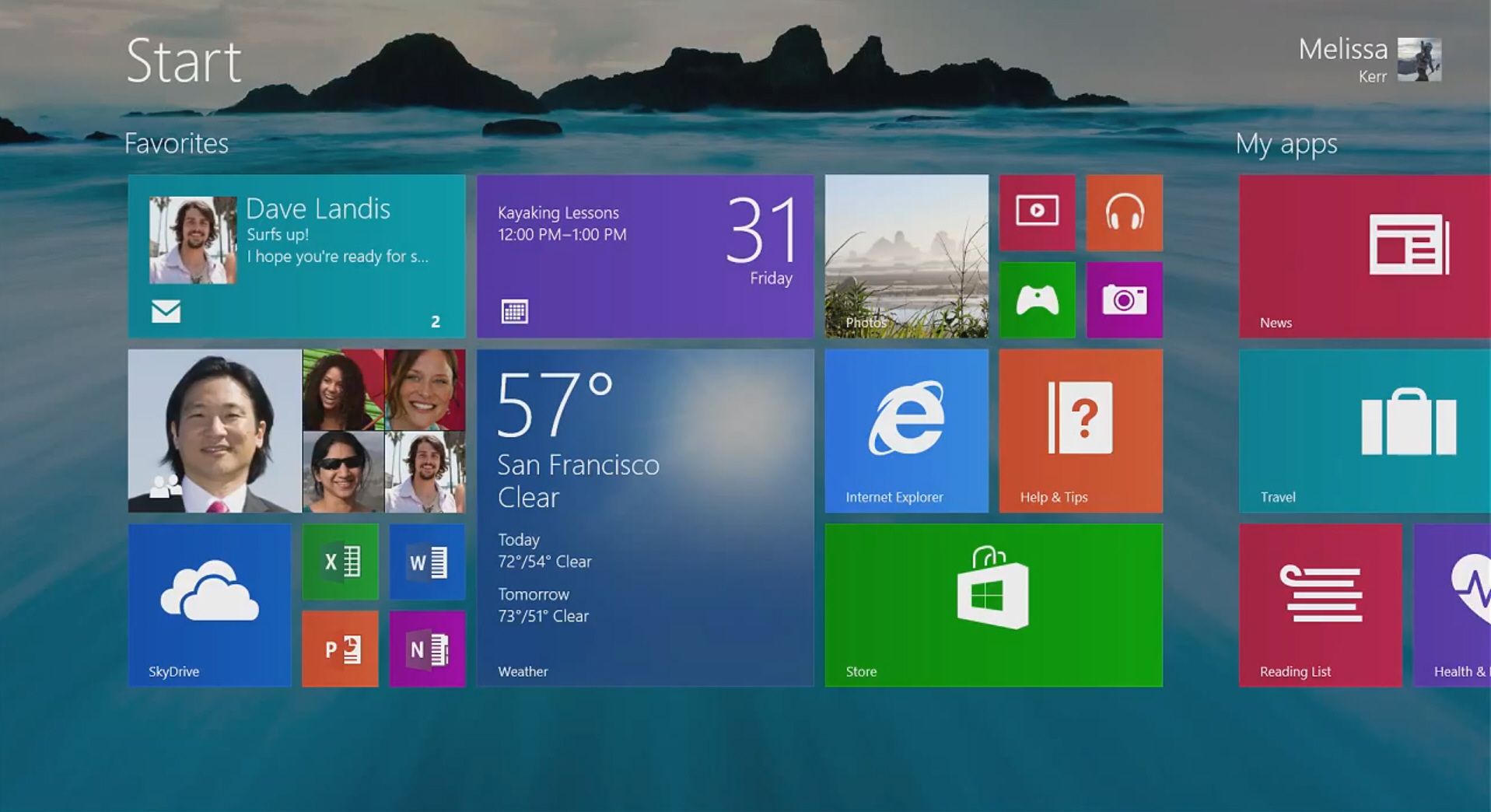
It has been exactly a month since I joined Windows 8 World.  I know this because my Office free trial ended, destroying my productivity for the day.  I've been getting good with integrating little new features while still generally ignoring Microsoft's Metro vision for how I should use my PC.  I got around to unclogging my start menu, though I Windows+D straight to desktop as a reflex anyway.  I dropped my files into Skydrive and have found most of the capabilities of Office 2013 that I already knew about on 2010. I even started using the touch gestures; sometimes it's easier to use Skype or my .pdf reader as an app if I can just swipe in an out.  I don't think the cursor's days are numbered, and my Metro start menu is still ignored, but I learned to at least clean house within my Microsoft-imposed hell.

And then Windows 8.1 happened, and my faith in Microsoft to listen to its consumers was restored.  It's not like anything was that different.  The famous start button returns, the snapping tool gets more flexible, the start menu has new live tiles and sizing options, and the Windows store isn't a mess.  On the first day, I went about business as usual, rather underwhelmed.

But then I accidentally snapped a news app in, and realized I could resize it and move it around. Now I can actually meld Metro-world and desktop world, customizing my current screen and multi-tasking unlike how I ever could pre-Windows 8.  And then I decided, "If I'm going to actually use some programs as an app to take advantage of this cool view, I might as well organize my start menu."  My search for good icons brought me to the Windows Stores, which now prominently shows ratings and recommendations, while still feeling like there is more space than before.  I downloaded apps in a frenzy, treating my PC like a phone and fiddling with the layout (I'm pretty OCD when it comes to organizing technology) until I could conceivably spend most of my time in Metro mode.  Let's be honest; most 21-year-olds could survive on just social media, Chrome, Office, Amazon, Steam and Netflix for about 90% of their computer usage.  I noticed hundreds of apps that were probably in existence before 8.1, but ones I always ignored due to that small initial hurdle of confusion.  There's a beautiful little tool called Piano Time.  I was pressing pretty 6-note chords more easily than any fake piano I've tried.  And all the apps were waiting with a "NEW" tag in my All Apps area, now reachable with a swipe downwards on the touchpad.  I felt that "power-at-your-fingertips" feeling, where everything seemed intuitive and did what I wanted it to do, unlike how I felt the entire first 29 days.

All it took to make me realize Windows 8 wasn't awful was a a slight push to get me sledding down Metro Mountain.  My main thought now is: couldn't anyone have told Microsft to make its tools more flexible?  Wouldn't serious consumer testing have shown these minuscule changes would be worth making?  And if Windows 8 was so clearly inadequate and unable to change consumers, why did it take a year to polish?  I wouldn't mull over these questions, as you'll just get frustrated.
This guy is probably feeling good
for the first time in a while.

I could tell on first boot-up yesterday, when a tutorial spoke to me like an adult, but also didn't assume I've been sitting in a Redmond office with Steve Ballmer for a year, that Microsoft was listening.  But I'd like to see the company continue to update its UI at least every few months.  Google and Apple make near-constant fixes, and users expect no less.  With 8.1, Microsoft now has the software of 2013 to match its hardware of 2013, now it just needs the customer service and responsiveness of 2013.

Tuesday, October 8, 2013

Netflix, eBooks, iTunes - The Gang's All Here (#10)

How the digitalization of content resized all of our media, and what will happen next.

Twenty years ago, TV shows were 22 or 44 minutes only.  Best-selling books were 150-300 pages, newspapers were the size you could comfortably read with two hands, music albums 30-60 minutes, and movies 90-150 minutes.  Why?  Money and form constraints, mainly.  Content of all forms followed size patterns so that it felt substantial and worth paying for, but could fit on a VHS, or a CD, or be bound. 

Then the commercial internet was available, and everything changed.  Well, not immediately.  Albums and movies and books were still usually the same length.  It was still easier for consumers to start TV shows at the top of the hour, and invest in a book around 200 pages (i.e., not American Tragedy). It was what we were used to.

 
But then we got creative.  As the web matured and became more complete, we found no reason to restrict ourselves based on form. With virtual folders and 500 gigs of hard drive space, who cares whether an album is ten minutes or ninety?  Visual stories could be told all at once in a movie, but also five minutes at a time on Youtube, or just 5 seconds at a time.  I post to my blog ~500 words at time: no binding or publishing costs required.  Netflix throws its content at you seasons at a time, and what we can't find there we download by the season.  Digitalization means 'one size fits all' has become 'all sizes fit me'.

This is not news, per se, if you lived through the late 20th and 21st centuries.  But what I find most interesting is how entire industries have grown or gone away as a result of this paradigm shift.  Our binge-watching culture has given birth to a recapping industry; journalists share insight about a TV episode, and people who are at the same point find each other and discuss in the comments.  TV themes are shorter or hookier; no one needs to know the story of the Brady Bunch every time when they are watching 9 episodes in bed.  One of my favorite albums, Pat Metheny's The Way Up, is one 68-minute composition-no flipping of the record or tape or CD or even tracks were required.  News doesn't resemble itself at any time in history.  There are 13 million archived New York times articles but 17 billion Tumblr blogs.  I consider Twitter Vines (6 seconds or shorter videos) an art form, and film majors are actually getting discovered through Vine microfilm competitions.


The possibilities are great; here's a good example of new technology changing art.  I'm working on a project for class where I am helping E-publish a women's book.  Her non-fiction work about communist Russia spanned many regions, fields, and decades, and she described it as difficult to find the right order to present the information.  So I thought, why do we need a linear story?  Why not make a web of connected stories as they are in real history?  We could have a story about Lenin lead to stories about the 1920's, or to other revolutionary leaders, or to his faction, the Bolsheviks, depending on what reader wants to see next.  We could even visualize the story in a way books couldn't, with hundreds of embedded photos or videos.  And it could all be on a Kindle or iOS app.  I'll fill you in more as the project progresses, but you get the idea.


I fully expect TV shows to abandon the idea of standard episode lengths in the next five years.  The Kindle market has already done this for books.  As CDs die out, expect more and more artists to ignore the restraints every generation of musicians before them has felt as they try to record and promote themselves. Say goodbye to big-budget recording and music stores, say hello to Garage Band and SoundCloud.  Soon, no major human event, even in the developing world, will go unrecorded.  Expect a world where there is no "normal" media, few artistic standards, and no limits.  Are you excited?